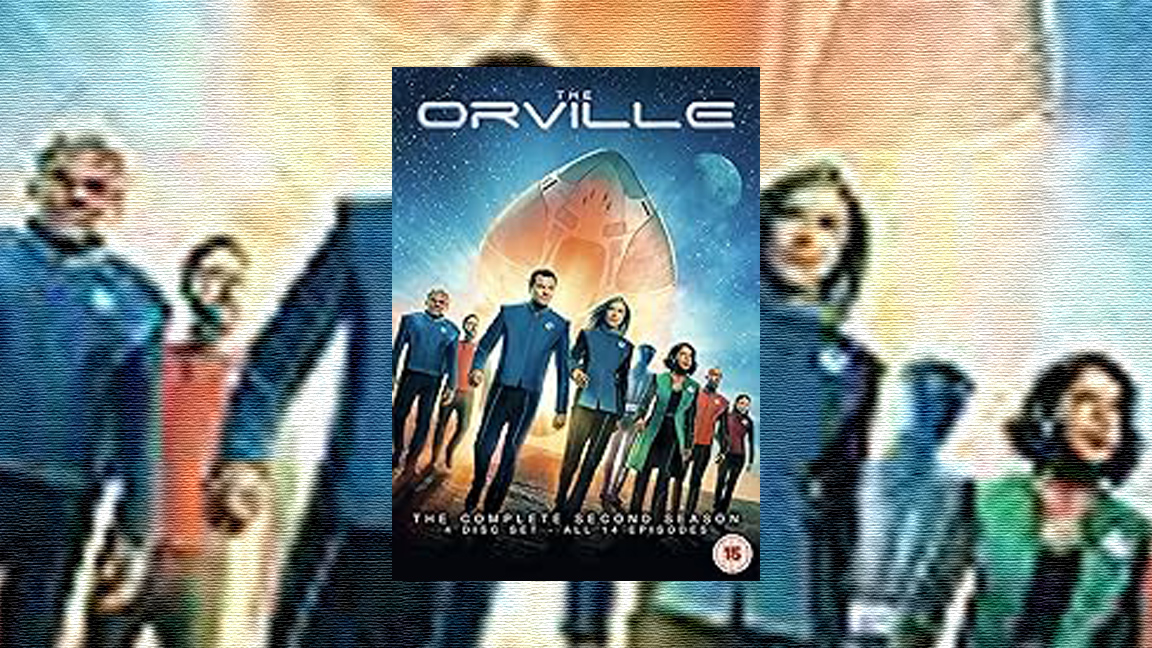
The Orville: a journey into sci-fi comedy

[et_pb_section fb_built=”1″ theme_builder_area=”post_content” _builder_version=”4.27.4″ _module_preset=”default” custom_padding=”1px|||||”][et_pb_row _builder_version=”4.27.4″ _module_preset=”default” theme_builder_area=”post_content”][et_pb_column _builder_version=”4.27.4″ _module_preset=”default” type=”4_4″ theme_builder_area=”post_content”][et_pb_text _builder_version=”4.27.4″ _module_preset=”default” theme_builder_area=”post_content” hover_enabled=”0″ sticky_enabled=”0″]

Seth MacFarlane is probably best known for his work on well-known shows like “Family Guy,” “American Dad!,” and “The Cleveland Show.” He has made a guest appearance on “Star Trek: Enterprise,” and has been inspired to create his show, “The Orville.” MacFarlane not only writes and produces the show, but is the main character, Captain Edward “Ed” Mercer. 

The first season was released in 2017, followed by the second season in 2018-2019 under Fox before being taken in under Hulu and releasing the third season in 2022.  

During the first season, the tone had some serious elements but was kept pretty light throughout that first season. During the second, it got a little more serious, but in the third season after Hulu took over, the budget seemed to have gotten larger, and with the new streaming platform, they were able to tackle far more difficult topics.  

With difficult topics comes a lot of challenges, but the way many of the topics are handled with respect and a touch of humor to take some of the edge off was really impressive. According to reviews, the first season did not do very well with critics, but season two and onwards was well-received.  

The main cast is part of the Planetary Union, which is an interstellar alliance in the 25th century, with many species coming together on ships like the USS Orville (ECV-197), a mid-level exploratory vessel. While it is technically an exploratory vessel, they get into trouble over and over again. This trouble is usually with species like the Krill and the Kaylon, both having some interesting lore to them.  

The first episode sets an interesting tone for several characters and the relationships between them. Starting the show off with Ed walking in on his then wife Kelly Grayson, played by Adrianne Palicki, sleeping with a blue alien and switching to him being promoted to Captain of his own ship was a unique start to a show about space exploration for sure. Next thing you know, Kelly Grayson is found to be Commander Kelly Grayson, the newly appointed First Mate to her now ex-husband Ed on his new ship, Orville.  

A character that has some interesting story lines and character development is Lieutenant Gordon Malloy, played by Scott Grimes. He does not seem to be very lucky in love, but his humor is almost always on point with his timing. He has quickly become a favorite of mine with how he handles tough situations with humor and wit. Malloy is also a very intelligent man who can think on the fly with his piloting skills, like when he pulls off a risky maneuver he called “Hugging the Donkey,” where he moved the ship around the enemy ship as if drifting a car instead of a massive spaceship.   

Lieutenant Commander Bortus, played by Peter Macon, and Doctor Claire Finn, played by Penny Johnson Jerald, are characters that play an important role in the show as well. Bortus is a race of alien that is known as a single sex race, though that becomes one of those hard topics they broach later. He is very dry and brutally honest, but it works for him. Doctor Claire has interesting character depth that gets explored in her romantic subplots as well as her handling of complex situations. She is a very compassionate character but has a wry sense of humor that pairs well with her field. I would say overall, “The Orville” is a solid 4/5 for me. 

[/et_pb_text][/et_pb_column][/et_pb_row][/et_pb_section]
Stranger Things Season 5 Review, No Reset Button

[et_pb_section fb_built=”1″ theme_builder_area=”post_content” _builder_version=”4.27.4″ _module_preset=”default” custom_padding=”0px|||||”][et_pb_row _builder_version=”4.27.4″ _module_preset=”default” theme_builder_area=”post_content”][et_pb_column _builder_version=”4.27.4″ _module_preset=”default” type=”4_4″ theme_builder_area=”post_content”][et_pb_text _builder_version=”4.27.4″ _module_preset=”default” theme_builder_area=”post_content” hover_enabled=”0″ sticky_enabled=”0″]

Season five of “Stranger Things” feels less like a normal season of television and more like a long goodbye. From early on, it is clear that Hawkins is not something that can simply be saved and reset. The damage left behind from season four shapes everything, and the show commits to a heavier, more final tone all the way through. 

One of the strongest choices this season makes is letting loss linger. Max being alive but not truly present hangs over the group constantly, especially Lucas. His grief and frustration are uncomfortable to watch in the best way because there is nothing he can do to fix it. The show finally allows characters to sit in pain instead of immediately turning it into motivation or action. 

Eleven’s arc feels the most complete it ever has. Instead of focusing on how strong she is, the season focuses on control and choice. Her final confrontation with Vecna is not really about power but about refusal. Refusing to become him. Refusing to let trauma define her. It feels like the natural end of the story that began when she first escaped the lab. 

Vecna himself is used more carefully this time. He feels less like a villain who needs constant screen time and more like something inevitable. His presence looms even when he is not on screen, which makes the threat feel heavier and more personal. 

Will’s coming out is handled quietly and respectfully. It is not treated as a major plot twist or emotional centerpiece, but as a small moment of honesty in a season full of endings. The show does not overexplain it or turn it into a big deal. It simply lets it exist as part of Will growing up and understanding himself, which fits both the character and the tone of the final season. 

Steve, Nancy, and Jonathan finally stop repeating the same emotional loops from earlier seasons. The ending is not perfect or overly sentimental, but it feels honest. Not everyone ends up where fans might expect, and that realism works in the show’s favor. 

The finale avoids a clean reset. Hawkins survives, but it is permanently changed, and so are the people who grew up there. The last moments are small and human rather than flashy. Friends sitting together. Silence. A sense that childhood is truly over. 

While season five is not the most fun season of “Stranger Things,” it may be the most meaningful. It closes the series by accepting that growing up comes with loss, change, and unfinished feelings, and it does not try to soften that truth. 

[/et_pb_text][/et_pb_column][/et_pb_row][/et_pb_section]

The final community opinions on Hollow Knight: Silksong

[et_pb_section fb_built=”1″ theme_builder_area=”post_content” _builder_version=”4.27.4″ _module_preset=”default” custom_padding=”0px|||||”][et_pb_row _builder_version=”4.27.4″ _module_preset=”default” theme_builder_area=”post_content”][et_pb_column _builder_version=”4.27.4″ _module_preset=”default” type=”4_4″ theme_builder_area=”post_content”][et_pb_text _builder_version=”4.27.4″ _module_preset=”default” theme_builder_area=”post_content” hover_enabled=”0″ sticky_enabled=”0″]

Approximately four months and three weeks after the release of Hollow Knight: Silksong, the gaming community has beaten the game and formed their opinions. After all of the excitement that the game generated at release, it became clear that the community behind Silksong’s predecessor, Hollow Knight, had very high hopes.  

Silksong is a Metroidvania game based in Pharloom, a kingdom in disrepair though not completely abandoned. You meet pilgrims making their way to the citadel at the top of this kingdom, though most don’t survive to make it there. Hornet, our protagonist, gets captured and is brought to Pharloom. When she escapes her captors, your main objective becomes reaching the citadel. You go through difficult boss battles and arenas, meet many characters like a caravan of flea characters and Shakra the map maker, and can complete quests for the towns you come across. In comparison to Hollow Knight, Silksong gives the player more choice, allowing Hornet to build bonds with characters and dictate what will happen in the acts of the game. 

The game as a whole was received very well by both Hollow Knight community members and newcomers to the series. The positive aspects of the game being heavily related to its intricate and well thought out level/world design. There are 32 distinct areas on the map that the player gets to explore as they progress through the game, each feeling unique to one another. With the new movement of Silksong, these areas have their own ways to progress. 

Great examples of this are in an area called the Hunters March, which utilizes the pogo mechanic so that you can avoid spikes that fill the area. Another example is in an area called Mount Fay that uses the claw line mechanic to have you scale the mountain while avoiding being frozen. Each area brings its own quirks to the game that makes it feel fleshed out and nicely done. Adding onto that each area has multiple bosses that complement their themes, sometimes catching the player off guard.  

With every good game, there also comes issues that the players have with them. With Silksong, the biggest problem people have had was the backtracking. Because of the number of bosses that the game has, it makes sense that dying is very common, even for seasoned players. In  Silksong, you can heal yourself and save when you sit on a bench, which also respawns enemies. Though these benches are riddled through Pharloom, they may not be close to the arena or boss that you are trying to fight, and having to backtrack through treacherous areas to collect your things and fight a boss can be daunting and quickly become an annoyance. In the boss fight for Groal the Great, the runback takes anywhere from three to five minutes, while you also risk dying again during it. While not every boss fight has this issue, it is still a mildly annoying part of the game. Though runbacks are very common in Metroidvanias and not just an issue within Silksong.  

With the Hollow Knight: Silksong DLC Sea of Sorrow rapidly approaching in 2026, it’s clear that even with the difficult bosses and bad runback, Silksong is a well-crafted and good game. This holds true with Silksong receiving the title of 2025 game of the year during the Steam game awards.

[/et_pb_text][/et_pb_column][/et_pb_row][/et_pb_section]

‘Pluribus,’ Shades of Gray

[et_pb_section fb_built=”1″ theme_builder_area=”post_content” _builder_version=”4.27.4″ _module_preset=”default” custom_padding=”0px|||||”][et_pb_row _builder_version=”4.27.4″ _module_preset=”default” theme_builder_area=”post_content”][et_pb_column _builder_version=”4.27.4″ _module_preset=”default” type=”4_4″ theme_builder_area=”post_content”][et_pb_text _builder_version=”4.27.4″ _module_preset=”default” theme_builder_area=”post_content” hover_enabled=”0″ sticky_enabled=”0″]

“Pluribus” is a show that does nearly everything correctly. It will be revered like Vince Gilligan’s other shows (“Breaking Bad” and “Better Call Saul”). It is deeply human, and that might be the best part. In this review, there will be spoilers for the first episode and other minor plot points. 

The show stars Rhea Seahorn, playing romance novelist Carol Sturka, trying to navigate a world now run by a hive mind called the Others. The hive mind was created in a lab after scientists discovered coding for a virus being projected from space. They then created the virus, testing it on rats before a human got infected, eventually spreading to all but 13 people in the world. The Others are peaceful and meet almost any demand the immune make, but their end goal is to have the remaining 13 immune join the rest of the human race. Carol is seemingly the only person opposed to such a goal and thus clashes with the hivemind in the form of Zosia played by Karolina Wydra in a love-hate relationship mirroring actual relationships people have. Another character, Manousos Oviedo, played by Carlos-Manuel Vesga, refuses all contact with the Others. Eventually Manousos discovers the existence of Carol via videotapes she sends to the immune, leading him to travel from Paraguay all the way to Albuquerque, New Mexico, in order to help Carol reverse the virus.  

The show does a good job showing the negative and positive aspects of the Others. For example, the Others don’t kill, but this also leads them to not pick plants, causing there to be a crisis in the food supply. Everyone is happy, but it’s a result of everyone being basically one person and having all identity and autonomy stripped away from them with no consent. Nearly a billion people died in the so-called “Joining,” the event where the virus was activated. This includes Carol’s manager and wife Helen, adding to why she initially distrusts the Others. The show really is shades of grey and so morally complex. It deals with ideas of identity, choice, and what it means to be human. 

The cinematography is wonderful, with almost every shot being beautiful. All the actors give an amazing performance, especially Vesga. The music is mostly good, besides the intro, which isn’t nearly as memorable as that of “Breaking Bad” or “Better Call Saul.” 

One of the only problems the show might have is how long it will take for another season. Increasingly, more shows have taken longer and longer gaps with seemingly fewer and fewer episodes. Estimates for a second season release would be in late 2027, two years after the first season. Regardless, “Pluribus” is an amazing show that deserves immense praise. From its visuals to its storytelling, it’s hard to find many flaws. It is available for streaming on AppleTV. Overall “Pluribus” is the best piece of media I have reviewed so far. I would give the show a 9.2 out of 10 for sure.

[/et_pb_text][/et_pb_column][/et_pb_row][/et_pb_section]

The final community opinions on Hollow Knight: Silksong

[et_pb_section fb_built=”1″ theme_builder_area=”post_content” _builder_version=”4.27.4″ _module_preset=”default” custom_padding=”0px|||||”][et_pb_row _builder_version=”4.27.4″ _module_preset=”default” theme_builder_area=”post_content”][et_pb_column _builder_version=”4.27.4″ _module_preset=”default” type=”4_4″ theme_builder_area=”post_content”][et_pb_text _builder_version=”4.27.4″ _module_preset=”default” theme_builder_area=”post_content” hover_enabled=”0″ sticky_enabled=”0″]

Approximately 4 months and 3 weeks after the release of Hollow Knight: Silksong, the gaming community has beaten the game and formed their opinions. After all of the excitement that the game generated at release it became clear that the community behind Silksong’s predecessor, Hollow Knight, had very high hopes.  

Silksong is a Metroidvania game based in Pharloom, a kingdom in disrepair though not completely abandoned. You meet pilgrims making their way to the citadel at the top of this kingdom, though most don’t survive to make it there. Hornet our protagonist gets captured and is brought to Pharloom, when she escapes her captors your main objective becomes reaching the citadel. You go through difficult boss battles and arenas, meet many characters like a caravan of flea characters and Shakra the map maker, and can complete quests for the towns you come across. In comparison to Hollow Knight, Silksong gives the player more choice allowing Hornet to build bonds with characters and dictate what will happen in the acts of the game. 

The game as a whole was received very well by both Hollow Knight community members and newcomers to the series. The positive aspects of the game being heavily related to its intricate and well though out level/world design. There are 32 distinct areas on the map that the player gets to explore as they progress through the game, each feeling unique to one another. With the new movement of Silksong it allows for these areas to have their own ways to progress. Great examples of this are in an area called the Hunters March, it utilizes the pogo mechanic so that you can avoid spikes that fill the area and in an area called Mount Fay that uses the claw line mechanic to have you scale the mountain while avoiding being frozen. Each area brings its own quirks to the game that makes it feel fleshed out and nicely done. Adding onto that each area has multiple bosses that compliment their themes sometimes catching the player off guard.  

With every good game there also come issues that the players have with them. With Silksong the biggest problem people have had was the backtracking. Because of the amount of bosses that the game has it makes sense that dying is very common even for seasoned players. In  Silksong you can heal yourself and save when you sit on a bench, this also respawns enemies. Though these benches are riddled through Pharloom they many not be close to the arena or boss that you are trying to fight, and having to backtrack through treacherous areas to collect your thing and fight a boss can be daunting and quickly become an annoyance. In the boss fight for Groal the Great the runback take anywhere from three to five minutes, while you also risk dying again during it. While not every boss fight has this issue it is still a mildly annoying part of the game, though runbacks are very common in Metroidvanias and not just an issue within Silksong.  

With the Hollow Knight: Silksong DLC Sea of Sorrow rapidly approaching in 2026 its clear that even with the difficult bosses and bad runback Silksong is a well crafted and good game. This holds true with Silksong receiving the title of 2025 game of the year during the Steam game awards.  

[/et_pb_text][/et_pb_column][/et_pb_row][/et_pb_section]
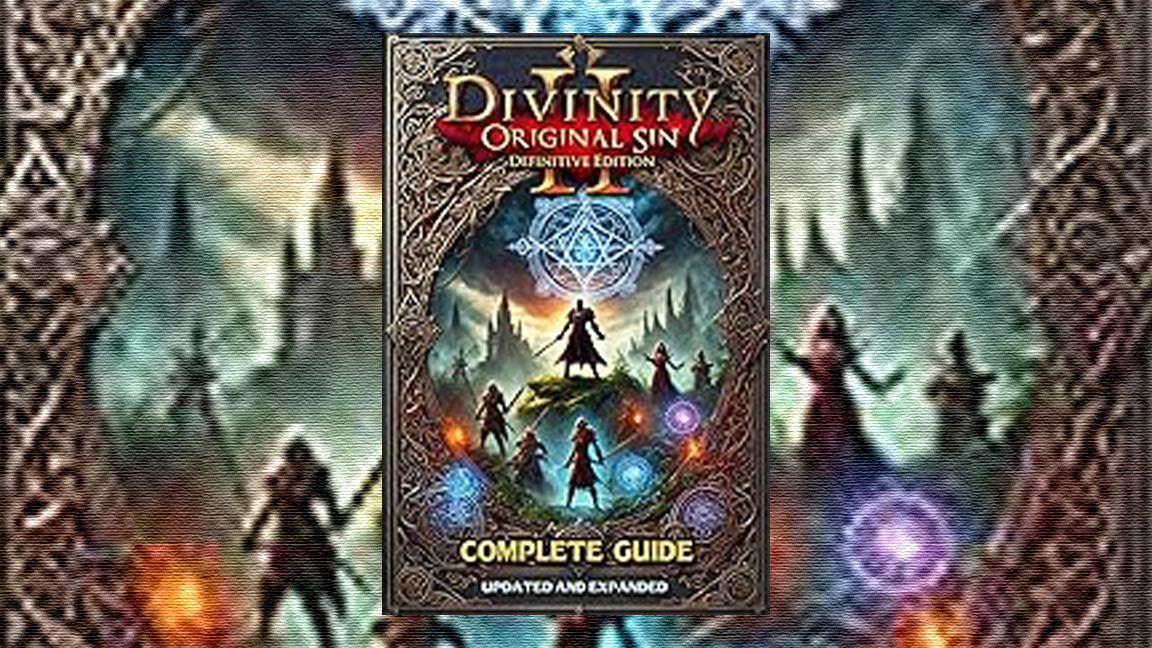
Dark Fantasy for the win

[et_pb_section fb_built=”1″ theme_builder_area=”post_content” _builder_version=”4.27.4″ _module_preset=”default” custom_padding=”0px|||||”][et_pb_row _builder_version=”4.27.4″ _module_preset=”default” theme_builder_area=”post_content”][et_pb_column _builder_version=”4.27.4″ _module_preset=”default” type=”4_4″ theme_builder_area=”post_content”][et_pb_text _builder_version=”4.27.4″ _module_preset=”default” theme_builder_area=”post_content” hover_enabled=”0″ sticky_enabled=”0″]

Divinity: Original Sin II is not a game for everyone but still deserves some love. It is a turn-based roleplay game made by Larian Studios released in 2017 and music composed by Borislav Slavov, the same studio and composer who brought Baldur’s Gate 3 to life. 

The game came onto my radar after the announcement of Divinity, the seventh installation in the series, being announced at the last Game of the Year Awards ceremony following a departure from the Baldur’s Gate franchise. 

The trailer for the new game is very graphic, as is some of the gameplay in Divinity: Original Sin II, so audiences need to be aware of this before watching or playing. However, while the story has a plethora of dark elements throughout, it is still a diverse story with an even wider range of choices for the player. While having a mature rating can limit your audience, it opens a whole new array of topics to explore in the story that could not if less mature audiences were being targeted.  

One wonderful thing about Divinity: Original Sin II, is that not only can you play single player fine, but you can also play multiplayer just as well. Not only that, but the game was released to a variety of gaming systems, so both console and PC players could enjoy it.  

While the game itself has a cool layout and good mechanics, the story it is trying to tell is captivating to see unfold. Some of the topics seen in the story are graphic and violent but add to the story in unexpected ways. One of the big ones you become increasingly familiar with if you choose the companion character Sebille, is that elves are cannibals. 

This alone is such a unique take on elves that it sets this world apart from all others I have seen. Elves are tall and have the signature long elf ears but have borderline gangly limbs that truly set them apart from all other creatures in the game. Not only this, but when they eat flesh of others, they can see that creature’s memories, experience what they felt, and even gain new abilities or spells from it.  

Waking up on a slave ship with a collar around their neck, the player is in a precarious situation. After waking up, you are taken through the tutorial of how to move, do all sorts of actions, the usual kind of opening to a game. The opening cutscene tells of a witch hunt started because horrible monsters called Voidwoken emerged and began attacking people who used Source, attracted to it.  

From then on, all creatures ranging from elves, humans, dwarves, lizards, undead, and even animals who had a trace of Source, which is essentially soul magic in this game; they are rounded up and shipped off to a faraway island. People who can manipulate this energy are called Sorcerers. The ship you wake up on is full of captured Sorcerers, all with collars to make sure they cannot use it. After meeting all the available companion characters, investigating a murder, and encountering an old woman who is partially responsible for the Sorcerer witch hunt, the ship is attacked and sinks. Landing on the ship’s intended destination of Fort Joy, you need to figure out what is happening to the Sorcerers who are taken away by the Magisters and find a way off the island. And that is just Act 1. Each act has a different piece of the story set in a different place. 

The player has the choice between 14 classes, and while that choice shapes the kinds of things you will excel at, nothing is set in stone. You could choose a magic heavy class, but with the right tweaks to your skills, weapons, play style, and choice of skills, you can create something tailored to you. The game is not easy to start on, but if you put in the time to learn what everything does, then you will do great.  

If you have played both this game and Baldur’s Gate 3, then you may be familiar with the companion system. While it was frustrating that each player could not have a full team of companions each when playing multiplayer, being only limited to one companion character to control and develop alongside my own character was kind of nice as a first-time player of the franchise. I hope to see the option of having more open up in the new game.  

Overall, the game is a 5/5 for me, and I have been recommending it to anyone I can with the following advice. Make sure to read the content warnings beforehand, otherwise you might be a bit surprised. Almost everything you can see or touch is lootable, so do not skimp on your strength stats or your thievery skill if you need to steal something. Stealing can be a little broken in the game but helps when you need a ton of skill books but do not have the money for it in the early game, even more so in the later game as things get more expensive, so load up on as much gold as you can before leaving the island. 

[/et_pb_text][/et_pb_column][/et_pb_row][/et_pb_section]
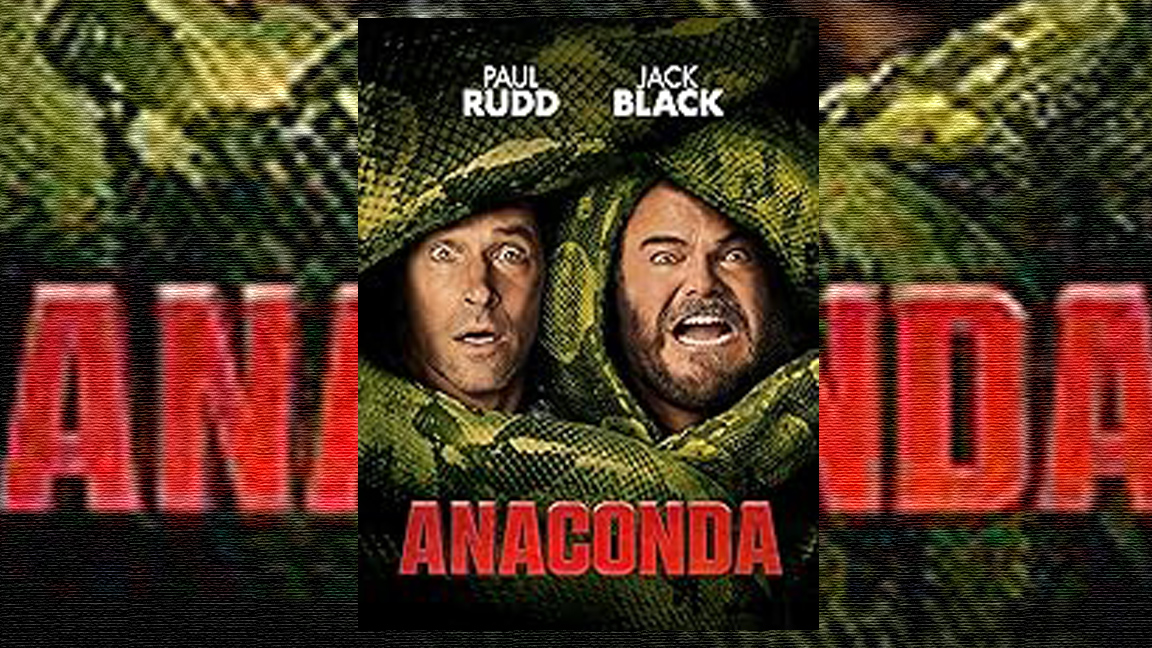
‘Anaconda’ Don’t Got it

[et_pb_section fb_built=”1″ theme_builder_area=”post_content” _builder_version=”4.27.4″ _module_preset=”default” custom_padding=”0px|||||”][et_pb_row _builder_version=”4.27.4″ _module_preset=”default” theme_builder_area=”post_content”][et_pb_column _builder_version=”4.27.4″ _module_preset=”default” type=”4_4″ theme_builder_area=”post_content”][et_pb_text _builder_version=”4.27.4″ _module_preset=”default” theme_builder_area=”post_content” hover_enabled=”0″ sticky_enabled=”0″]

If I had to choose one movie that represents the nostalgia-laden age we live in, “Anaconda” would be a pretty good fit. A film so basic in its messaging and yet, as described by my father as he walked out the theater, “hard to watch”. This is coming from a man who loves “Nothing but Trouble.” 

“Anaconda,” directed by Tom Gormican, stars Jack Black as Doug, Paul Rudd as Griff, Steve Zahn as Kenny, and Thandiwe Newton as Claire. The movie, as described by Wikipedia, is a meta remake of the 1997 “Anaconda” movie. It is truly beyond any genre definition as it is action adventure, comedy, and horror all at the same time. 

The film primarily revolves around Doug and Griff, who as children aspired to make movies. But now as adults, Griff is a failed TV actor serving mainly as an extra, while Doug films wedding videos. Griff meets up with Doug to celebrate Doug’s birthday and proposes that they remake “Anaconda,” with Griff having bought the rights to it. Kenny and Claire join in, but Doug is skeptical until he rewatches an old film they made as kids. They fly out to Brazil and meet up with Carlos, played by Selton Mello, who is a snake handler, and serves as possibly the only point of enjoyment in the film. 

Meanwhile concurring with the main plot, a woman named Anna, played by Daniela Melchior, is on the run, and claims the boat that the crew was going to use is her father’s. They end up all agreeing to go together, and they film a majority of the movie all before Griff accidentally kills the snake by throwing it into the river, causing it to be chopped up by the boat’s propeller. Carlos, mourning the loss of his pet, goes out into the jungle at night. The crew goes looking for him only to find he has been eaten by an actual giant anaconda, and thus, they must escape. 

The movie is trying to do a lot- even more than what I have described. The plot feels so disjointed and deeply incoherent at times. Another problem is the chemistry between the actors, which is essentially non-existent. None of the emotions feel real, and the movie doesn’t know what it wants to be. It’s not particularly scary, it’s not at all funny, but it does have some decent action bits. The only thing going for the film is its premise, but even then, this is only used as nostalgia to draw fans of the franchise in. You get a cameo from famed rapper and star of “War of the Worlds” (2025) Ice Cube, but it barely lasts. 

This film will make no one happy. Fans of the original will not enjoy it due to its only minor use of the original characters. People who have never watched the old movies will dislike it, because it’s not at all unique or interesting. Overall, “Anaconda” is yet another remake attempting to cash into nostalgia. I give the movie a 3.2/10. 

[/et_pb_text][/et_pb_column][/et_pb_row][/et_pb_section]

‘Shelby Oaks,’ wonderfully unique

[et_pb_section fb_built=”1″ theme_builder_area=”post_content” _builder_version=”4.27.4″ _module_preset=”default” custom_padding=”0px|||||”][et_pb_row _builder_version=”4.27.4″ _module_preset=”default” theme_builder_area=”post_content”][et_pb_column _builder_version=”4.27.4″ _module_preset=”default” type=”4_4″ theme_builder_area=”post_content”][et_pb_text _builder_version=”4.27.4″ _module_preset=”default” theme_builder_area=”post_content” hover_enabled=”0″ sticky_enabled=”0″]

“Surprising” is the best word to describe “Shelby Oaks,” a film directed by YouTuber Chris Stuckman. Its blending of old and new media will potentially stand the test of time. The movie works, and while not horrifying, it is still a horror watch fans should go see. 

Funded via Kickstarter, the movie serves as a continuation of an Alternate Reality Video series Stuckman created in 2021. In the series called Paranormal Paranoids, shot in a found footage style, we follow a group of ghost hunters who eventually go missing. Thus, the movie starts off 12 years after they disappeared in the abandoned ghost town of Shelby Oaks, Ohio, following a mockumentary style as we see Mia Brennan-Walker, played by Camille Sullivan, being interviewed about her sister Riley, played by Sarah Durn, who was the host of the show. Except for Riley, the rest of the group members were found dead shortly after they disappeared. 

Before the interview ends, a man, played by Charlie Talbert, knocks on the door and shoots himself, all while holding a tape from the group’s camera. Mia watches the tape and begins investigating the man who brought it to her, leading her down a rabbit hole going back to the sisters’ childhoods. 

What really makes this movie special to me is the use of alternative reality videos, a form of storytelling I have always loved. It shows that these two forms of media can be blended and, in a way, gives legitimacy to that form of art. I sincerely hope more forms of art make use of this medium. 

I loved the mockumentary setup in the beginning. I felt it worked amazingly and was probably my favorite part about it. Motherhood comes up as a theme as before Riley went missing Mia and her husband were trying for a kid. While not super scary, the movie can leave you on edge and has some pretty creepy visuals at points. 

As for the problems, it is fairly easy to predict the last 15 minutes, as it is rather cliche. When Mia gets the tape, she does not give it to the police, which would have probably made things easy for her. While the movie does have one core theme, it lacks any others, which definitely hurts the movie in some ways. 

For a first-time director, one has to commend Stuckman for his work.  

Overall, while not the best movie I have seen this year, it is my belief, and to be honest, my hope, that “Shelby Oaks” will become influential on other film makers. If you enjoy alternate reality games, this film is for you. If you are curious about the genre, I would watch this as a stepping stool. Perhaps I am clouded by my love of these kinds of stories in the way other reviewers are not, given its middling to low review. But overall, I would give “Shelby Oaks” an 8.1 out of 10. 

[/et_pb_text][/et_pb_column][/et_pb_row][/et_pb_section]

‘Birdman’ still soars beyond expectations

[et_pb_section fb_built=”1″ theme_builder_area=”post_content” _builder_version=”4.27.4″ _module_preset=”default” custom_padding=”0px|||||”][et_pb_row _builder_version=”4.27.4″ _module_preset=”default” theme_builder_area=”post_content”][et_pb_column _builder_version=”4.27.4″ _module_preset=”default” type=”4_4″ theme_builder_area=”post_content”][et_pb_text _builder_version=”4.27.4″ _module_preset=”default” theme_builder_area=”post_content” hover_enabled=”0″ sticky_enabled=”0″]

Alejandro G. Iñárritu’s 2014 movie, “Birdman: The Unexpected Virtue of Ignorance” has got to be one of the most inventive and creative ideas of the decade. This cinematic work blends an emotionally driven story about attempting to stay relevant with the technical daring ambition and crazy pursuit of an artist’s purity. It is not only a film that makes you leave thinking about it; it is a movie that pays close attention, while its visual style and immersive sounds only draw you in more. 

“Birdman” follows the story of Riggan Thomson, played by Michael Keaton, who was able to convey this fierce weakness in the character. Thomson is a former blockbuster star who was known for playing the role of a winged superhero years earlier. As he hopes to revive his career, he also hopes to make his alter ego disappear as he stages and stars in a Raymond Carver adaptation on Broadway. As the opening night draws closer, his life slowly unravels through stress, personal conflict, and professional chaos; as well as his persistent inner voice that taunts, mocks, and sometimes empowers him. 

A major highlight of the appeal of “Birdman” was in the daringness that lies in the cinematography. Shot by Emmanual Lubezki, the film makes it seem as though it is one continuous take, moving through the backstage halls, city streets, and dressing rooms with an immense amount of fluidness that the camera nearly feels like a living thing. This interesting one-shot technique is used to create a sense of chaotic momentum. The scenes bleed into one another without the breathing room of traditional cuts, helping capture the frantic atmosphere, and the mental spiral Thomson undergoes as he runs out of time. The illusion does not work as a stunt, but rather as a way to press the narrative on. By holding the viewer in a continuous flow, the film makes you feel the pressure, claustrophobia, and euphoria Thomson experiences throughout the movie. 

The persuasive jazz score from Antonia Sanchez also complements the visual pattern as well. It is a drum-based soundtrack that enters at important emotional moments that help intensify the scenes of conflict or stress with nearly a tangible pulse. The music almost feels less deliberate, like an improvisation that showcases the energy backstage. It rises sharply during hallucinations, arguments, or sudden problems. The result of this is a sound heightens the tense air without overwhelming it. It helps to give the movie a beat that guides the viewer through Thomson’s unraveling mind. 

The movie also gains power from its ability to restrain presenting magic as real or surreal. The film regularly hints at Thomson’s abilities and fantastic events. But it also stops short of confirming whether what we see is real or not. The times that appear to be telekinesis or flight are quickly undermined, leaving room for interpretation. Yet, it also allows a moment for the audience to decide whether the extraordinary visuals represent the genuine phenomenon he is, or if they are the distortion of Thomson’s deteriorating mental capacity. Instead of explaining the unusual aspects of the film, it trusts the viewers to draw their own conclusions, making it an engaging story that can also resonate on a deeper level with some. 

Each actor’s performance in the movie is incredibly strong. Keaton delivers one of the defining roles in his career, being able to capture both Thomson’s desperation and stubborn hope. Edward Norton brings an unpredictable humor to the film as a great, but risky stage actor. Emma Stone portrays Thomson’s daughter and assistant as an emotionally grounded character, a sharp performance that helps to expose her insecurities and longing to be truly seen. 

“Birdman” succeeded because it took a risk on every level. The technical experimentation with its theme, the performances of a diverse cast and being able to deepen the emotional stake as it refused to hold the audience with only one interpretation; while also being able to support itself and create a story that has long-lasting power. The film intertwined visual aspects, jazz scores, and psychological variation to make it an achievement that would stand out. 

[/et_pb_text][/et_pb_column][/et_pb_row][/et_pb_section]

‘The Rock’ changed but not crushed by ‘The Smashing Machine’ in MMA biopic

[et_pb_section fb_built=”1″ theme_builder_area=”post_content” _builder_version=”4.27.4″ _module_preset=”default” custom_padding=”0px|||||”][et_pb_row _builder_version=”4.27.4″ _module_preset=”default” theme_builder_area=”post_content”][et_pb_column _builder_version=”4.27.4″ _module_preset=”default” type=”4_4″ theme_builder_area=”post_content”][et_pb_text _builder_version=”4.27.4″ _module_preset=”default” theme_builder_area=”post_content” hover_enabled=”0″ sticky_enabled=”0″]

Benny Safdie’s “The Smashing Machine,” starring Dwayne “The Rock” Johnson in a redefining career performance as MMA legend Mark Kerr, gives us a compelling yet brief glimpse into Kerr’s life as one of the mixed martial arts fighters of its early days.  

The biographical drama from A24 premiered at the Venice International Film Festival in September and won the Silver Lion before its October theatrical release, showcasing Johnson’s dramatic range in ways the audience and fans have not quite seen. Despite his strong performance and Safdie’s devoted directional approach, the movie’s two-and-a-half-hour runtime feels inadequate and does not fully explore the complex layers of Kerr’s life. 

Johnson, other than his voice, is unrecognizable under a black wig as he carries the weight of his characters’ demons. He portrays Kerr during his most pivotal years of 1997 to the 2000s, when the man’s career collided with his growing substance abuse addiction. Emily Blunt co-stars as Dawn Staples, Kerr’s girlfriend, and eventual wife, acting with an equally raw performance that helps to anchor the movie’s emotional values. 

The film does great work in capturing the violent nature of early UFC competition and the toll it takes on the fighters’ mentalities and bodies. Safdie’s well known camerawork makes a suffocating closeness to the fighting sequences we watch that are uniquely paired with jazz music, rather than a typical aggressive soundtrack that we associate with combat sports films. 

“The Smashing Machine” does falter in a couple of categories of course: Its pacing and depth. The film moves through Kerr’s story so quickly that it misses critical elements, making it feel almost underdeveloped. Kerr’s opioid addiction, which is arguably a central tragedy of his career, is only given a surface level treatment with it truly deserves a thorough examination. We as the audience see him struggle, overdose, and enter rehabilitation, but the psychological grip of the addiction and very specific circumstances that come with addiction and led him down that path remain annoyingly gray. 

Comparably, the fighter’s professional achievements, which earned him the nickname “The Smashing Machine” and made him one of MMA’s most known and dominant forces, sprinted by without needed context. For the viewers unaware of the early UFC history, the film only gives a little framework for understanding what makes Kerr an exceptional fighter, or why his fighting style revolutionized the sport. Kerr’s techniques, evolution of his perspective, and his mindset receive such little screen time. 

The relationship between Kerr and Staples does give us an insight into some of the film’s most emotional scenes, but it also suffers from the limited timeline. The dynamic is clearly toxic, yet somehow deeply codependent; however, the film fails to fully dig into why they remained bound to each other through these repeated cycles of arguing and reconciliation. Blunt and Johnson of course share incredible chemistry in their confrontations, but the more intimate, quiet moments that could highlight their bond were absent. 

The movie’s reluctance to embrace the traditional sports movie conventions does prove to be both a strength and a weakness. We see that Safdie deliberately avoids the triumphant buildup of the typical genre. Instead, he creates a space that feels more like “The Raging Bull” rather than “Rocky.” The choice helps make it a more realistic and melancholic portrait that leaves small threads of the narrative dangling. 

There are some supporting performances from real-life fighters Ryan Bader and Mark Coleman and Bas Rutten as himself to add to the authenticity, though the relationships also feel unexplored. Kerr’s friendship with Coleman and his training with Rutten both appear as significant people in his life yet are only shallow investigation. 

Maceo Bishop does a great job in his cinematography to maintain Safdie’s close-up intensity as the jazz score by Nala Sinephro distinguishes the film from the normal fight movies. The technical elements help to create an intriguing aesthetic that elevates the material, even when the script itself does not always deliver. 

The film ends with a finale that reveals Kerr and Staples married 11 days after his huge loss at the 2000 Pride Grand Prix, explaining how he retired in 2009 and he remains widely unknown despite him being a pioneer of modern MMA. While they are presented as text, it highlights what the movie needed more time.  

“The Smashing Machine” succeeds as a showcase for Johnson’s dramatic capabilities and as an unusual sports biopic that does not romanticize its subject. The film is worth watching for the acting and approaches to the athletic glory, and personal collapses that can come with it. 

[/et_pb_text][/et_pb_column][/et_pb_row][/et_pb_section]