
People are too parasocial about Timothée Chalamet

[et_pb_section fb_built=”1″ theme_builder_area=”post_content” _builder_version=”4.27.4″ _module_preset=”default” custom_padding=”0px|||||”][et_pb_row _builder_version=”4.27.4″ _module_preset=”default” theme_builder_area=”post_content”][et_pb_column _builder_version=”4.27.4″ _module_preset=”default” type=”4_4″ theme_builder_area=”post_content”][et_pb_text _builder_version=”4.27.4″ _module_preset=”default” theme_builder_area=”post_content” hover_enabled=”0″ sticky_enabled=”0″]

Timothée Chalamet began his rise to stardom with the film “Call Me by Your Name,” earning him the title of the third youngest “Best Actor” nominee in the Oscars. Starting off his career, he fit perfectly into the artistic “soft boy” archetype, reflecting in his characters in films such as “Little Women.” Chalamet drew a level of fangirl attention akin to that of the Harry Styles on 2011 Tumblr. However, recent actions have left these fans wondering- Was he really the poetic boy they thought him to be? 

In a recent interview with Matthew McConaughey, Chalamet made a controversial comment, saying, “I don’t want to be working in ballet or opera or things where it’s like, ‘Hey, keep this thing alive, even though no one cares about this anymore.” This comment stirred up a frenzy of offended fine arts lovers and left loyal fans feeling betrayed. People felt that he had crossed a line by taking a dig at ballet and opera. 

This remark was especially surprising, as he has shared that he comes from a family of New York City Ballet dancers and fine arts enthusiasts. One could argue that while, yes, the comment was flippant and careless, he was merely making the accurate observation that these art forms struggle to stay relevant to the general public. With full context, it’s clear that he was expressing his concern that the same might soon be said about cinema. 

Although this is what really caused a commotion, the whispers of Chalamet not being quite who people thought did not start here. In April of 2023, Chalamet began publicly dating Kylie Jenner. Jenner famously does not fit the description of someone who a thoughtful, bookish Tumblr boy would be seeing. This threw fans off as they tried to figure out what these two could possibly have in common. 

All of this seems shocking to any parasocial fan who had a certain image of Chalamet in their head. However, looking back at early career interviews, none of this should come as a huge surprise. Making statements about his personal interests, such as rap college basketball, he has demonstrated his appreciation for things that don’t fit into the box that he has been put into. 

On top of what he has expressed in interviews, this shift can also be noted in the type of character roles he has been taking as of late. Between “Dune” and “Marty Supreme,” Chalamet has reflected an effort to lean into more traditional leading-man roles. 

Perhaps he has always been this type of person, which doesn’t inherently mean he was being disingenuous from the start. He may have been a timid new actor rising to immense stardom and trying really hard not to get cancelled immediately. Now that he is well-established, he feels free to be expressive in a more authentic way. Ultimately, though, fans need to embrace the duality of man and accept that humans are dynamic creatures. Instead of parasocial fans squeezing Chalamet into this specific archetype of man, they are now seeing him for what he is: Just a regular, human dude. 

[/et_pb_text][/et_pb_column][/et_pb_row][/et_pb_section]

Kaylee’s Conspiracy Corner: Carrey on or carry on?

[et_pb_section fb_built=”1″ theme_builder_area=”post_content” _builder_version=”4.27.4″ _module_preset=”default” custom_padding=”0px|||||”][et_pb_row _builder_version=”4.27.4″ _module_preset=”default” theme_builder_area=”post_content”][et_pb_column _builder_version=”4.27.4″ _module_preset=”default” type=”4_4″ theme_builder_area=”post_content”][et_pb_text _builder_version=”4.27.4″ _module_preset=”default” theme_builder_area=”post_content” hover_enabled=”0″ sticky_enabled=”0″]

If you’ve opened social media over the past few weeks and thought you saw people questioning whether Hollywood had started replacing celebrities with clones, you were not imagining things. The internet has been circulating with different theories about whether the man seen on stage at the 2026 Cesar Awards was actually the real Jim Carrey or someone else entirely.  

The controversy began when Carrey appeared at the 51 Cesar Awards in Paris on Feb. 26, where he received the Honorary Lifetime Achievement Cesar for his contributions to film. While the award itself was a big moment for Carrey and his fans, it also left many surprised simply by his appearance in public.  

Carrey has mostly stayed out of the public domain these last few years as he’s taken a break from acting as a whole, even quoting in Access Hollywood that, “If angels bring down some sort of script that’s written in gold ink that is important for people to see,” then he would reconsider acting.  

“I really like my quiet life, and I really like putting paint on canvas, and I really love my spiritual life,” said Carrey. “I feel like- and this is something you might never hear another celebrity say as long as time exists- I have enough.” 

While fans were excited to see him make a reappearance, it wasn’t just his return that got people talking- It was his face. 

Photos and videos from the ceremony quickly went viral, with many viewers protesting the 64-year-old actor’s appearance, stating that Carrey was “completely unrecognizable.” Others went further, stating that the person on stage wasn’t him at all.  

Posts and comments varied from confusion to full-blown conspiracy theories, with some speculating that Carrey had undergone plastic surgery. Others believe this Carrey to be a body double, wearing a hyper-realistic mask, or even a clone replacing the real actor.  

Not everyone is convinced of this, though.  

Some viewers completely disregard the entire notion of him being anyone but the real Jim Carrey, with some commenting, “I’m appalled by the stupidity I’m witnessing today,” or “Yes, it’s really Jim Carrey. You need mental help if you genuinely think he’s been replaced.”  

Still, this hasn’t stopped the internet from continuing to dig deeper.  

Some theories suggest that Carrey had experienced a mental health crisis and altered his appearance as a result. Others counteract that with the argument that Carrey has long been an advocate for mental health awareness, which makes this explanation unlikely. 

Of course, Hollywood has also seen its share of tragic stories involving actors who openly discussed mental health struggles, like Robin Williams and Heath Ledger. For some, however, this history only adds to another layer of speculation.  

Adding fuel to the fire are quotes circulating online that allegedly came from Carrey himself, such as, “If I ever come out of retirement, it’s not me,” or, “If I shave my beard, they got me.” While these quotes could act as strong evidence to contribute to speculations, I fail to find anywhere where he is seen quoting that directly. I did find him discussing a what-if in relation to shaving his beard, but that was not relevant to his disappearance in any way.  

One clip that conspiracy theorist continuously reference comes from the 2014 segment of Jimmy Kimmel Live!, where Carrey openly discussed the conspiracy surrounding Hollywood and the illuminati.  

Some believe his comments were meant to act as warnings to the public, while others believe he was openly mocking the whole idea of it. Watching the interview, I found it to be a stretch to say he was mocking and not informing in the name of mockery. 

The speculation only grew when well-known makeup artist and drag performer, Alexis Stone, posted images implying that they had attended the ceremony as Jim Carrey through the use of prosthetics and makeup. 

For conspiracy theorists, that possibility suddenly made the idea of an impersonator seem much more realistic. If someone could replicate his appearance with enough makeup and prosthetics, then maybe the person accepting that award wasn’t Carrey after all.  

That raises yet another question: If it wasn’t him, who hired the impersonator, and why? 

Despite the mass amounts of viral rumors circulating, people involved with the event quickly shut down speculation. Carrey’s representative confirmed that the actor did attend the ceremony himself and personally accepted his award. Organizers of the Cesar Awards backed that statement up, saying that the appearance had been planned for months and that Carrey had even spent that time practicing his acceptance speak in French. 

Of course, none of these statements have been confirmed by Carrey- The real one, at least. 

So, was it a clone? A professional impersonator? Or just the reality that celebrities can always alter their appearance, even if we do not expect them to?  

Whatever the truth may be, the rate at which rumors spread shows just how quickly the internet can completely transform one surprising appearance into a full-blown conspiracy. 

Until Carrey himself weighs in, the debate will likely continue to grow; one screenshot, one video clip, and one theory at a time.  

Maybe it’s nothing, or maybe it’s everything. Until next time. 

[/et_pb_text][/et_pb_column][/et_pb_row][/et_pb_section]

The 2026 Olympics is one for the history books

[et_pb_section fb_built=”1″ theme_builder_area=”post_content” _builder_version=”4.27.4″ _module_preset=”default” custom_padding=”0px|||||”][et_pb_row _builder_version=”4.27.4″ _module_preset=”default” theme_builder_area=”post_content”][et_pb_column _builder_version=”4.27.4″ _module_preset=”default” type=”4_4″ theme_builder_area=”post_content”][et_pb_text _builder_version=”4.27.4″ _module_preset=”default” theme_builder_area=”post_content” hover_enabled=”0″ sticky_enabled=”0″]

The 2026 Winter Olympics were hosted by Milan Cortina, Italy. Throughout the month of February, the best of the best athletes were representing their countries, competing for gold. Opening ceremonies were held on Feb. 6 and officially closed the world event on Feb. 22. A total of 16 sports were competed: Figure skating, ice hockey, short track speed skating, speed skating, curling, alpine skiing, freestyle skiing, cross-country skiing, ski jumping, Nordic combined, snowboard, bobsleigh, skeleton, luge, biathlon, and the newly added ski mountaineering. 

The United States came in second place of the 24 countries that competed. The American athletes took home a total of 33 medals, 12 gold, 12 silver, and 9 bronzes. Norway took first place with 41 overall medals.  

These Olympic games were the shiniest of the previous Winter games for the United States. Bringing home more gold medals and total medals than any other winter Olympics for the United States. Of the U.S. medals, the female athletes won 12 medals, six of them being gold and the male athletes received 12, four gold medals. 

With many record-breaking moments, these games made their place in history books. The USA’s top two earning sports being freestyle skiing, earning eight total medals and speed skating with five medals. USA’s speed skater, Jordan Stolz, earned three of the five medals. Setting the record in the 500m and 1,000m where he earned two gold medals.  

Women’s individual figure skating earned a gold medal after a 24-year drought. Sarah Hughes, the gold medalist in 2002, held the record until 20-year-old Alyssa Liu took first place this year. Overall, the US figure-skating team brought home three medals.  

Both Hockey teams earned gold medals for the first time. The Women’s team set the Olympic record for most consecutive shutouts, making five games when the opposing team is unable to earn points. Hilary Knight made history for most career Olympic points, 33 goals, and 15 in U.S. women’s ice hockey history. The men’s hockey team, also ending a longstanding drought, won gold for the first time since the 1980 Olympic games.  

Elana Meyers Taylor, an American bobsledder, who came into the Olympics with five medals, finally earned her first gold medal. Adding to the record she holds for the most Olympic medals by an American bobsledder. Becoming one of four U.S. Winter Olympians with six or more medals, joining Bonnie Blair, as the most decorated U.S. women in Winter Olympic history. 

While many of the USA teams made history for outstanding performance, others were highlighted for traumatic reasons. Like Alpine Ski Racer, Linday Vonn, who had injured her ACL before the competition, but decided to still compete with the guidance of doctors and coaches. During her run, Vonn clipped a gate and went into a high-speed crash resulting in an airlift from the track, and required multiple surgeries after a complex tibia fracture according to the New York Times article, “Watching sports stars play through pain: Risks, rewards, and what our reporters thought.”  

These Olympic games were unlike any other. With many records set and standards being redefined by Americans. It poses a highlight in the country’s current state. 

[/et_pb_text][/et_pb_column][/et_pb_row][/et_pb_section]
When is it time for a social media break?

[et_pb_section fb_built=”1″ theme_builder_area=”post_content” _builder_version=”4.27.4″ _module_preset=”default” custom_padding=”0px|||||”][et_pb_row _builder_version=”4.27.4″ _module_preset=”default” theme_builder_area=”post_content”][et_pb_column _builder_version=”4.27.4″ _module_preset=”default” type=”4_4″ theme_builder_area=”post_content”][et_pb_text _builder_version=”4.27.4″ _module_preset=”default” theme_builder_area=”post_content” hover_enabled=”0″ sticky_enabled=”0″]

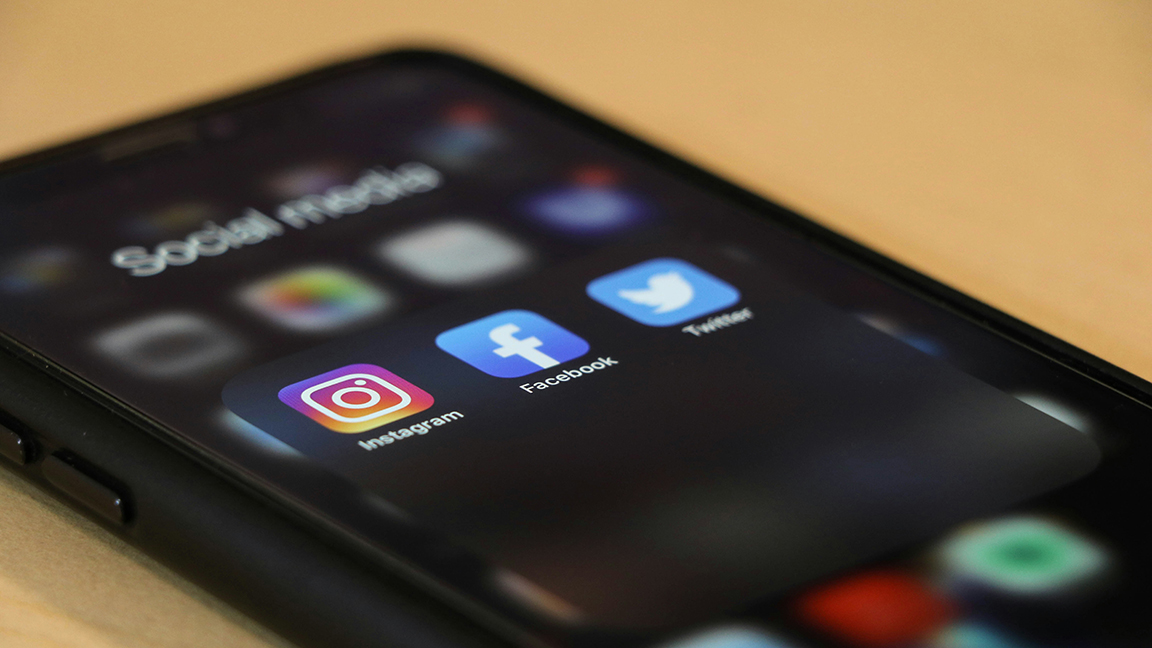
Social media is an addiction that many teenagers, young adults, and even some older people struggle with. While it isn’t by default an “addiction,” it frequently turns into one. Many people notice the decline in their mental health after mindlessly scrolling, and try to remedy this habit by doing a “social media detox.” But what exactly does that entail, and how can someone know it’s time to try one? 

The social media addict isn’t exclusively to blame for this nonstop scrolling. These apps are designed to keep people scrolling for as long as possible, often using tactics that can wreak havoc on the user’s mental health. The apps can be used to stay in touch with friends, keep up with the news, learn fun life hacks, and watch cute videos of unhinged cats. It’s a source of unlimited dopamine hits. Not only is all of this content available, but it’s catered towards each individual’s interests based on an algorithm. 

It’s commonly agreed upon among researchers that being overwhelmed by so much contrasting content can have terrible impacts on mental health: Depression, anxiety, self-esteem decline, insomnia, impulsive behavior, distractibility, etc.… So how can a user know when it’s time to put away the entertaining “get ready with me” videos and spend some time outside for a while? 

A common signal that it’s time to take a break includes feeling drained, overwhelmed, anxious, or otherwise upset after scrolling. While a social media session can be inspiring, educational, or eye-opening, it can get to a point where your brain is processing too much negative information for too long and doesn’t know how to handle it. 

If your time spent on social media is actively taking too much time away from being with loved ones or doing hobbies, that is also a problematic symptom of this addiction. 

Sometimes, people are fully aware that they need to take a minute and step back from the online world. But like any other addiction, many aren’t sure where to start. 

The first step is to plan your “detox.” How long should this break be, what are your time limits on each app if you aren’t quitting cold turkey, at what point do you stop scrolling? It may be more beneficial to take smaller breaks more periodically to get your brain used to being off the grid. Maybe go two days a week without social media, or delete your apps every weekend. This can be a more realistic and therefore more successful way of going about it. 

The next step after making a plan is figuring out other activities to do when you would normally be scrolling. While it’s healthy to be bored sometimes, in the beginning, this is not always a realistic expectation. This is a great time to try something new, or rediscover an old hobby that you “don’t have time for anymore,” such as reading, walking, meeting with friends, or drawing. 

To execute these plans, you can simply delete your social media apps, or utilize one of many apps and settings that allow you to limit your own screen time on each app. For people who are super committed to the bit, you can change your technology all together and revert back to the stone age- buy a flip phone off Marketplace. It sounds outlandish at first, but the novelty of it may be just enough to kick out that social media addiction. Plus, who doesn’t love violently slamming their phone shut after a call that could’ve been a text? 

At the end of the day, accountability is what can really make any of these options work. Having an accountability partner works for many addictions, and social media is no different. Make it as difficult or inconvenient as possible to access your social media apps outside of your designated time slots. While a social media addiction may not cause a whole lot of bodily harm, your brain is worth protecting, and cutting out social media may just help with that. 

[/et_pb_text][/et_pb_column][/et_pb_row][/et_pb_section]

Shopping second-hand should be the first choice

[et_pb_section fb_built=”1″ theme_builder_area=”post_content” _builder_version=”4.27.4″ _module_preset=”default” custom_padding=”0px|||||”][et_pb_row _builder_version=”4.27.4″ _module_preset=”default” theme_builder_area=”post_content”][et_pb_column _builder_version=”4.27.4″ _module_preset=”default” type=”4_4″ theme_builder_area=”post_content”][et_pb_text _builder_version=”4.27.4″ _module_preset=”default” theme_builder_area=”post_content” hover_enabled=”0″ sticky_enabled=”0″]

Turning to the past, a rising fashion trend has emerged in recent years. Shopping second-hand has become a trend on social media, a sustainable trend that has many environmental, philanthropic, and financial benefits, all while keeping your style unique.  

Shopping secondhand is a great method to add to your personal style. From clothes to furniture and houseware, buying used items can be beneficial to the environment, philanthropy efforts, and your wallet.  

Producing new clothing can heavily impact the environment, adding to the world’s pollution and carbon emission levels. According to an article by Business Insider, “The fashion industry produces 10% of all humanity’s carbon emissions, is the second-largest consumer of the world’s water supply, and pollutes the oceans with microplastics.” 

Overall, producing new clothing items takes more time, energy, and water; in turn, causing environmental and social issues.  

When buying second-hand, all these efforts have been made. No additional production, marketing, and societal costs are necessary, lowering the end cost of the items at second-hand stores, like thrift stores. One of the most common reasons to start shopping for used items is the financial benefits. The cost difference between shopping for new and second-hand is substantial. 

One method of shopping second-hand is thrifting. Proceeds from thrift stores commonly go towards charity or non-profit efforts, including chain stores like Goodwill, Salvation Army, and local stores here in Pittsburg, like The Doggie Bag, where 100% of their proceeds go to the SEK Humane Society.  

Being more conscious of shopping efforts has been gaining traction in fashion and lifestyle trends. Following the trend, upcycling is also rising in popularity. Upcycling transforms by-products, or unwanted products into new materials or products of better quality while also personalizing the item.  

This method is a great idea to repurpose unwanted items into one-of-a-kind items. Designers use this method to make sustainable high-end items like ELV Denim, which repurposes denim products, one of the most expensive products to produce initially. ELV Denim said in an article by The Guardian, “Once retailers are aware that not only is upcycling a creative and conscious way to use excess stock but a revenue-generating way, I hope other companies will sit up and take note.” As sustainability becomes an issue of interest, upcycling is a great option for people and industries to explore.  

With second-hand shopping becoming more people’s first choice, the efforts have become digitally accessible. Apps like DePop, Poshmark, and ThredUp, being the biggest platforms, allow more options for these sustainable methods to reach. 

Choosing to be more sustainable with your shopping choices is more accessible than ever. Allowing for discovering new styles and aesthetics without adding to environmental and social issues, shopping second-hand should be the first choice when looking to add to your closet, decorate, or furnish your home.  

[/et_pb_text][/et_pb_column][/et_pb_row][/et_pb_section]

Is Michael Jackson guilty in the Epstein files?

[et_pb_section fb_built=”1″ theme_builder_area=”post_content” _builder_version=”4.27.4″ _module_preset=”default” custom_padding=”0px|||||”][et_pb_row _builder_version=”4.27.4″ _module_preset=”default” theme_builder_area=”post_content”][et_pb_column _builder_version=”4.27.4″ _module_preset=”default” type=”4_4″ theme_builder_area=”post_content”][et_pb_text _builder_version=”4.27.4″ _module_preset=”default” theme_builder_area=”post_content” hover_enabled=”0″ sticky_enabled=”0″]

Michael Jackson, the worldwide sensation known as the “King of Pop,” had several controversies throughout his career. To this day, the public is split on whether they believe the many accusations thrown at him. Since the release of the Epstein files, his name has become relevant once more. But do these files really make him out to be guilty? 

From bleaching his skin to behaving inappropriately with children, accusations were thrown at him left and right. Most notably, he was accused of sexual abuse of a child in 1993, which ended in a civil settlement, and a different child in 2003, which resulted in a criminal trial. In 2019, a documentary was released called “Leaving Neverland,” in which two men alleged long-term abuse by Jackson during their childhoods, but these accusations were later dismissed in court. 

It’s important to note that while the FBI had an ongoing investigation on Jackson for years, they never found anything that was cause for concern. He was not found guilty and was acquitted of all charges. More recently, a few of the children who he was accused of behaving inappropriately with, including Macaulay Culkin, came out as adults to say that he was innocent. They claimed that their parents had told them to speak out against him, assumedly for the money. In the eyes of the law, Michael Jackson kept his innocence until his death in 2009. 

During a wave of Epstein file releases earlier this year, a photo of Jackson and President Bill Clinton on one of Epstein’s properties was revealed, showing the two alongside Diana Ross and a few children, whose faces were redacted from the image. There was also another image released of Jackson standing next to Epstein. Of course, this caused a stir of conversation between Michael Jackson defenders and the people who still believe he was a creep who got away with too much. Why was he on Epstein’s property, and why with children? 

While the image was very suspicious, witnesses have come out to explain that Jackson meeting Epstein was a coincidence – he was touring properties to buy in Palm Beach and ran into Epstein. The children featured in the image with Clinton included his daughter, Paris, and his son, Prince, along with Ross’s son. On top of this, Epstein’s crimes were not out of the bag at the time these photos were taken. 

One of these witnesses was a victim of Epstein who, under oath, described the high-profile people who went to the island. She testified that she did see Michael Jackson on this day, and when asked if he had done anything inappropriate, she confirmed that he had not. 

So, he wasn’t guilty about the release of the Epstein files. Still, this got people talking, and people started speculating that the theme park built on Michael Jackson’s property, called Neverland, was actually some sort of haven used to protect children who were set to be trafficked onto the island. The conspiracy says that Jackson found out about Epstein and wanted to protect the children, even though the corrupt government wouldn’t help. Some even go as far as to say that this may have had something to do with Jackson’s suspicious death in 2009. 

While I believe that this would be in character for him, it is simply not true. Michael Jackson was known in Hollywood to be quite a whistleblower. If he saw something, he did not hesitate to say something. Jackson met Epstein briefly in Palm Beach, but they never met aside from that isolated incident. Epstein and his people knew better than letting Jackson know about the island. 

Neverland was simply built as a way for Jackson to relive the childhood that was stolen from him as a child star, and to share that joy with children. But whether it was a predator or a protector, there is no link between Michael Jackson and Jeffrey Epstein. 

[/et_pb_text][/et_pb_column][/et_pb_row][/et_pb_section]

Winter Olympics brings more than snow

[et_pb_section fb_built=”1″ theme_builder_area=”post_content” _builder_version=”4.27.4″ _module_preset=”default” custom_padding=”0px|||||”][et_pb_row _builder_version=”4.27.4″ _module_preset=”default” theme_builder_area=”post_content”][et_pb_column _builder_version=”4.27.4″ _module_preset=”default” type=”4_4″ theme_builder_area=”post_content”][et_pb_text _builder_version=”4.27.4″ _module_preset=”default” theme_builder_area=”post_content” hover_enabled=”0″ sticky_enabled=”0″]

With every Olympics, no matter the season, there are always plenty of controversies and scandals to go around. With the 2026 Milan-Cortina Winter Olympics, there were a few that gained notable news coverage and media outrage.  

Several well-known news sources hopped onto one story, which was dubbed an inappropriate name involving male genatalia. Male skiers were injecting hyaluronic acid into their genitals to increase the size, and according to sources like The New York Times, the logic is that with the increased size, their suits would stretch out, and wind would get caught in them, making them fly faster. 

If you are not sure how to feel about that, you would not be alone. The whole idea of it working seems ridiculous, much less going as far as possibly maiming yourself in such a sensitive body part just does not seem worth any medal. On one hand, it has a small chance of helping you win, and while that would give a huge rush of pride for years to come, but if something goes wrong and you do not win on top of it? Massive risk, limited reward.  

Unlike the men’s skiing event, the pairs figure skating event was shrouded in controversy for a whole other reason. For this event, there were no drugs, injections, or anything of the like. While there was a lot of celebration when the French pair figure skaters won the gold, there was tension among fans and judges. 

The French was not the favorite to win, instead, it was the American pair. The French pair of figure skaters made several errors in their routine while the American team had few to no errors in theirs. When the announcement of victory was made, the score cards were immediately brought into question. It turns out, that the French judge had rated the French team a whole point higher than the American team. He gave the French team 137.45 points, while giving the American team 129.74 points. 

This was the largest point discrepancy among all the scores given. For context, the score he gave the American team was an average of 5 points lower than what the other judges gave them, while the score he gave the French skaters was an average of 3 points higher than the others. When that kind of discrepancy is seen in a sport where literal fractions of a point can determine a win from a loss, there must be something amiss. There cannot be that large of a gap in scoring without buyouts or heavy bias clouding the judgement from the judge.  

The difference in tone between these two scandals alone is telling of what kind of shenanigans and biases that can happen during the games. That is without getting into what can happen before the games while the Olympic Village is being built. In such a high level of competition and talent, where even the smallest advantage means the difference between bringing home a victory for your entire country, or coming home empty handed, people get desperate, and everything is under scrutiny.  

[/et_pb_text][/et_pb_column][/et_pb_row][/et_pb_section]

‘Wuthering Heights’ movie review

[et_pb_section fb_built=”1″ theme_builder_area=”post_content” _builder_version=”4.27.4″ _module_preset=”default” custom_padding=”0px|||||”][et_pb_row _builder_version=”4.27.4″ _module_preset=”default” theme_builder_area=”post_content”][et_pb_column _builder_version=”4.27.4″ _module_preset=”default” type=”4_4″ theme_builder_area=”post_content”][et_pb_text _builder_version=”4.27.4″ _module_preset=”default” theme_builder_area=”post_content” hover_enabled=”0″ sticky_enabled=”0″]

“Wuthering Heights” premiered on Feb. 13 and was directed by Emerald Fennell. The movie is a feverish, stylized reimagining of the classic Emily Brontë novel. Known for her provocative works in “Promising Young Woman” and “Salt Burn,” Fennel approaches Brontë’s classic not as a sacred text but as raw material. The result is a film that is visually arresting and emotionally punishing, but not without controversy. 

The most glaring issue with the film is the casting of Heathcliff. Traditionally portrayed as racially ambiguous and explicitly described as dark-skinned, Heathcliff’s outsider status is central to the story’s tension around class and otherness. Fennel’s casting choice dilutes the racial and social marginalization that fuels Heathcliff’s alienation and build-up to vengeance. This adaptation severely risks reframing his rage as purely romantic obsession rather than the byproduct of systematic racism, cruelty, and prejudice. I can see the intention of Fennell’s idea of universalizing Heathcliff’s animosity as a threat all men are capable of, but still, the casting choice comes off as either tone-deaf to the struggles of people of color or blatant whitewashing. 

Fennell’s adaptation also diverges sharply from the novel’s intricate narrative structure, a broad, layered storytelling filter through the perspectives of Lockwood and Nelly, that creates emotional distance through ambiguity, allowing readers to question the narrators’ reliability. Fennell discards much of this framing device, opting for a more immediate, biased, linear narrative. The removal of these mediating voices streamlines the plot but sacrifices the novel’s haunting sense of generational storytelling. This results in the movie lacking the book’s second arc. By the end of the movie, Fennell’s framing of Nelly’s actions shifts the entire plot, making her an antagonistic character. 

Another major change in this adaptation is the total absence of any supernatural gothic elements from the original novel, the removal of ghosts, and the omission of the second half of the book, which further removes yet another layer of Brontë’s deep multigenerational storytelling. 

Yet for all its omissions, Wuthering Heights is undeniably cohesive and thematically focused. She strips the story to its most volatile core, emphasizing the destructive intensity between Catherine and Heathcliff. Tenderness curdles into manipulation. Love becomes indistinguishable from mental domination. By narrowing its lens, the film transforms a sprawling Gothic saga into a claustrophobic character study. 

In the end, Fennell’s adaptation may frustrate novel puritans, but it succeeds as an amateur-driven interpretation. It is less concerned with fidelity than with feeling, specifically the ugliness of attachment, shades of feeling, and longing. This Wuthering Heights plunges headfirst into obsession, revenge, depravity, and cruelty, and appears not as a faithful retelling but as a bold, unsettling excavation of love at its most corrosive state.  

Now, from my personal experience watching movies in theaters, I would have to say that, from the beginning to the middle of the movie, you begin to be drawn into phenomenal storytelling and develop a vested interest in one or the other characters. But by the end of the movie, despite the tragic ending, I don’t feel compelled to cry or feel sorry for any of the characters in the film. Mainly due to the amount of cruelty you see, every single character in this movie undertakes, and by the end, you feel a bleak, sterile ending. 

[/et_pb_text][/et_pb_column][/et_pb_row][/et_pb_section]

Pittsburg matchas ranked from worst to best.

[et_pb_section fb_built=”1″ theme_builder_area=”post_content” _builder_version=”4.27.4″ _module_preset=”default”][et_pb_row _builder_version=”4.27.4″ _module_preset=”default” theme_builder_area=”post_content”][et_pb_column _builder_version=”4.27.4″ _module_preset=”default” type=”4_4″ theme_builder_area=”post_content”][et_pb_text _builder_version=”4.27.4″ _module_preset=”default” theme_builder_area=”post_content” hover_enabled=”0″ sticky_enabled=”0″]

In the past several years, matcha tea has become more globally popular than ever. The green drink originated in 7th-10th century China and has a rich traditional history. As a healthier, slightly less caffeinated alternative to coffee, matcha became a worldwide social media staple during everybody’s mid-pandemic health kick. Because of this growing popularity, Pittsburg now has several options for purchasing a matcha on the go, and none of them taste quite the same as the next. Here are my rankings for my favorite matcha lattes of Pittsburg. 

Number six: Scooter’s Coffee 

My personal least favorite matcha is Scooter’s matcha. Scooter’s offers a matcha latte that is somehow never quite mixed enough. This sentiment also extends to the Scooter’s in Fort Scott. While the taste is okay, I have never ordered a matcha from a Scooter’s in which there were no giant matcha powder clumps piled around the drink. Aside from this, the flavor is acceptable, but not preferable. 

Number five: 7 Brew 

From extensive coffee combinations to fizzy energy drinks, 7 Brew has no shortage of fun drinks to offer the tired college students. While I’m definitely a huge fan of their flavored lemonades, their matchas are borderline flavorless. My theory is that while their cup sizes can get so large, their amount of matcha powder is too little and gets watered down. They must add too much milk to fill the cup. However, if the flavor of matcha makes you think of grass, but the concept makes your Instagram persona happy, 7 Brew would be a great place to add different flavors to the drink and drown out the earthy notes. 

Number four: Starbucks (Broadway Street) 

Specifically referring to Starbucks on Broadway Street, I would not rank their matcha very highly. In fact, I would probably rank it last if it were not for the ability to add extra scoops of matcha powder. This matcha is so bland and watered down; it is almost nothing but milk and ice. It is especially bad when ordering an iced matcha ahead; your drink will 100% be mostly water from the melted ice. No matcha to be found. This can be slightly remedied by adding extra matcha scoops (which is unfortunate if you want less caffeine). There are simply too much milk and ice. I am, however, a huge fan of the matcha Frappuccino, especially with strawberry puree added. 

Number three: Quick Sip 

I really have no complaints about matcha from Quick Sip. They add plenty of powder and mix it well every time. The flavor is great, and it tastes very similar to an authentic matcha without a bunch of extra sweeteners. Quick Sip is easily a top contender for me. 

Number two: The Balkan 

The Balkan makes a great matcha, and offers a flavored variant called the “Mine Dust” (I prefer it without the pistachio). The matcha tastes authentic and is always mixed to perfection. Even better, The Balkan is on the south side of town, making it extra convenient for Pitt State students. It is a local business, conveniently located, and it is delicious. If you have the extra time to go inside instead of using a drive-thru, this is the place to go. 

Number 1: The Library Starbucks 

Listen, I hate putting Starbucks in first place as much as the next small-business supporter. However, there is something so good about the matcha in the Pitt State library’s Starbucks specifically. I am not sure what they do differently than Starbucks on Broadway, but the milk to matcha ratio is perfect, and I have never been disappointed. The flavor is amazing and strong, and it gives me just the pick-me-up I need during long library days. The best part is that it is right there on campus. The convenience and the flavor cannot be topped, and I will choose this matcha any day. 

[/et_pb_text][/et_pb_column][/et_pb_row][/et_pb_section]

Home Is Where You Park It

[et_pb_section fb_built=”1″ theme_builder_area=”post_content” _builder_version=”4.27.4″ _module_preset=”default” custom_padding=”0px|||||”][et_pb_row _builder_version=”4.27.4″ _module_preset=”default” theme_builder_area=”post_content”][et_pb_column _builder_version=”4.27.4″ _module_preset=”default” type=”4_4″ theme_builder_area=”post_content”][et_pb_text _builder_version=”4.27.4″ _module_preset=”default” theme_builder_area=”post_content” hover_enabled=”0″ sticky_enabled=”0″]

For generations, the path of adulthood was: Graduate, get a job, rent an apartment, start a family, then eventually buy a house. But in the case of Gen Z, that path feels more like a pipe dream every day. In cities like Kansas City and Overland Park, rent can swallow half or more of a young professional’s paycheck. “Starter homes” no longer cost what they used to, and student loan debt lingers, making it hard to keep up with inflation. Instead of chasing an unattainable vision of stability, many are choosing something more radical: The age-old Nomadic lifestyle. 

The mobile lifestyle resurgence, known online as Van Life, has exploded across platforms like YouTube, Instagram, and TikTok. Doom scroll long enough, and you’ll see it. Converted cargo vans with cedar panel walls, compact kitchens, fold-down beds, and scenic sunsets framed through open back doors. It looks less like downsizing and more like financial freedom.  
Critics will dismiss it as a social media aesthetic, but for many young adults, it’s an economic survival strategy. Instead of spending $1500 a month on rent and utilities, a fresh Gen Z graduate could invest $20,000 in a used van and slowly convert it into a livable space. Solar panels replace electric bills. Mobile data replaces Wi-Fi, Parking tickets replace rent. The cost does not disappear; insurance, property tax, gas, maintenance, running water access, the eventual traffic ticket, and Internet access still add up, but they shift where the money goes to. Housing becomes variable rather than fixed, and geography becomes flexible rather than binding. In a housing market that feels predatory, flexibility is power.  
Since the 2020 pandemic, remote work has become possible in ways that would have been unthinkable a decade ago. The normalization of digital careers, from design and marketing to tech support and freelance contractors, means income is no longer tied to a ZIP Code.

Companies like Airbnb have leaned into digital nomad culture, reflecting a broader shift in how young professionals live and travel. If your job exists in the cloud and your office is a Zoom meeting, why does your home have to stay in one place? 

Van life isn’t just about economics; it aligns with Gen Z’s values. This generation is more skeptical of consumerism, more economically independent, more environmentally conscious, and more willing to reject traditional milestones. A smaller living space means fewer possessions. A mobile setup often means lower energy consumption. Experiences in national parks, along coastal highways, and under desert sunrises take precedence over square footage.  

Still, it would be naïve to paint van life as the ultimate solution. In places like San Francisco, vehicle dwelling often is not a lifestyle choice but rather an economic necessity. Local ordinances often restrict overnight parking, and safety can be a concern. Showers require planning or a gym membership; weather becomes a constant variable, and, unlike home ownership, living in a van does not build equity. Lastly, in such a compact space, it leaves no room to start a family. That raises a harder question: Is Van Life a loose definition of home, or a symptom of systemic failure?  
For some, it’s an adventure, a temporary chapter to save money, travel, and delay the pressure of a 30-year mortgage. For others, it’s adaptation in the face of a housing system that no longer works for young adults. When rent consumes opportunity, mobility becomes resistance. What is clear is that Gen Z is not waiting for the housing market to correct itself. They are improvising, reimagining stability as freedom rather than permanence, and choosing movement over mortgages. Van Life may not be a permanent solution to unaffordable housing. It is not scalable for everyone and does not address the root cause of skyrocketing prices. But it does show something powerful: A generation unwilling to measure success by square footage alone. For Gen Z, home is no longer just an address. It is autonomy, and sometimes autonomy comes with four wheels and half a tank of gas. 

[/et_pb_text][/et_pb_column][/et_pb_row][/et_pb_section]